Wednesday, April 15, 2020

The Bat - the slumdog harlot of mammals

Ozzy Ozbourne fucked Typhoid Mary and now we all have to stay inside.  It may not be a story old as time but it’s time this story was told.  You heard it here first: patient zero of the COVID19 outbreak has been overlooked and it all began on January 20, 1982 at Veterans Memorial Auditorium in Des Moines (pronounced Di-ez-Moy-in-ez).  Before we jump ahead to a Days Moones, Iowa 1982 let’s talk about a terrifying and super neat mammal: the bat.

First some words of wisdom from Bane, fictional supervillain and adversary to Batman: “Calm down doctor, now is not the time for fear.  That comes later.”  With that in mind, buy the ticket, take a seat, accept the neatness, freak out and get over it, it's pretty neat.

Bats are slumdog harlots and don’t give a fuck.  By slumdog I mean that bats live in huge colonies in dark, humid, shit filled caves. By harlot I mean sexual deviants with no regard for personal, public or pubic health.  And by bat, I mean bat.. In addition, bats can live up to 20 years, some up to 40, which gives them a lot of time to get their freak on (shout out to Missy Elliott).  This shitstorm of guano and indiscriminate geriatric bat orgies are ideal conditions for passing viruses to one another.  Oh also, they fly, live on all continents except Antarctica and make up 25% of all mammals.  So there’s a lot of them and they are everywhere.  Shit.  But also, super neat.
First, let’s dive into all the viruses that bats have been known to harbor and a little about a few for a nice bedtime story:  Ebola virus, Marburg virus, Swine Acute Diarrhea Syndrome (not kosher), paramyxoviruses, influenza virus, Araraquara orthohantavirus (really bad one), bunyaviruses (including severe fever with thrombocytopenia syndrome (SFTS) virus and Heartland virus), rotavirus, norovirus, reoviruses, rabies virus (87% acquired human rabies cases in US due to bats since 1980), and last but not least coronaviruses.

Now how can Batman/Batwoman spend their lives riding the village bat-cycle unprotected and inside a dark porta-potty without any consequences.  Well, you may not be surprised to learn that the answer is friggin neat.

Bats have a butt ton of DNA floating around in the cytoplasm of their cells.  You may be at home thinking, DNA is good, the more the better, right? Just like bourbon whiskey, guacamole and neat animal facts.  No jerkass, you clod.  In general, whiskey, guacamole and neat facts belong mostly in the nucleus and mitochondria and not the cytoplasm.  Cytoplasmic DNA can be generated by viral infections OR as a byproduct of oxidative metabolism and stress caused by the high demands of flight (side note: bats are the only mammal that can fly).

Normally, the response causes inflammation and activation of other immune mediators to remove the DNA fragments.  Studies have shown that evolution, yes evolution, fuck you Jerry Falwell Jr/Sr, has weakened the immune response to high cytoplasmic loads of DNA, namely in the form of signalling proteins called interferons, so bats don’t get sick as easily when they get exposed to nasty shit. That's pretty neat.

In conclusion, Ozzy Ozbourne bit the head off a bat that was infected with COVID-19 in Da Moughens, Iowa in 1982.  Then in late 2019 Ozzy traveled to Wuhan Province, China for a gig (unverified but highly likely), ate another bat (unrelated but likely), shared the bat with his Chinese tour manager, Typhoid Mary (unproved but he did), Ozzy fucked Mary (unsure but he would), TM got sick with a respiratory illness defined largely by fever, sore throat, pneumonia and respiratory compromise (unconfirmed but...poor girl), and then Mary got between 2 and 2.5 people sick at a wet market.  And now we all have to stay inside.

Thursday, December 19, 2019

Octopus - The Creature with Eight Pouses

The octopus.  Any educated person would expect to find eight vaginas, naturally, upon coming face to face with this mythical beast in the sweet coastal waters of western Mexico.   Boy was I mistaken.  Either this was a male octopus or the Greek’s were to busy philosopherizering on unimportant things like life and the universe and did not forsee the confusion that would ensue when they combined the terms meaning “eight” (okto) and “footed” (pous). 
Even if female octopuses only have one gonopore (science word for an octopus’s vertical smile) they are really really g-dang neat.  In this edition of Neat Animal of the Week we focus on the nervous system of the octopus which will guaranteed give you a neatness stroke.  We’ll leave the fact that octomuffs can stand tall on their arms, squeeze through a hole little bigger than one of its eyes and become a streamlined rocket or fold itself to fit into a jar behind and focus on neurons and shit like that.  
First, in order to gain perspective on the mind of this fetish filled eight footed freak, it’s prudent to point out that the most recent common ancestor between humans and the octopus is nearly three-times as old as the most ancient dinosaur and was most likely a worm-like creature with eye spots and a foreskin that lived nearly 750 million years ago (it would be another 749,998,000 years until the first mohel). Octobearded clams have nearly half a billion neurons close to the order of dogs (vs humans with 100 billion) and significantly more than plus the largest brain to body mass ratio of any vertebrate. Yet, as Donald Trump’s hands and penis would tell you: size isn’t everything! Despite the distance between humans and octovajayjays they have developed sophisticated behaviors including complex problem solving, task-dependent conditional discrimination, and observational learning more commonly found in mammals.  Octobeavers also have been found to have forms of short- and long-term memory, versions of sleep, and the capacities to recognize individual people and explore objects through play.

Also indubitably neat is the distribution of those neurons in their bodies. While most vertebrate’s neurons are concentrated in the brain, the majority of the neurons in octofannies are in their arms.  Their arms have the ability to sense touch and taste and even an arm that has been hacked off by a psycho ex-girlfriend can still perform independent functions such as reaching and grasping. Holy great balls of I’m so scared right now.  When an octocoochie reaches to grab something 2 waves of muscle activation occur: inward from the tip and one outward from the base.  Also, the neurons in each arm have loops (recurrent connections) which may give the arm a simple decentralized form of short term memory.  If you didn’t already have a neatness induced transient ischemic attack (Ni-TIA) then listen to this neat fact: researchers believe that opsins (proteins that make up photoreceptor cells) in the skin can sense different wavelengths of light and help octohoohas camouflage themselves.  The neatness is all-becoming.  

Friday, April 21, 2017

The Fangblenny - The Drug Dealer of the Indo-Pacific Ocean Heroin Highway

Anthony Romilio/University of Queensland
There's a crisis that's devastating rich and poor communities alike all over 'Merica. Opioid abuse, addiction, and widespread death and universal sadness as a result. And now the crisis has reached our oceans. Let me introduce you to the fangblenny (Plagiotremus rhinorhynchos), the pusherman street pharmacist of the Indo-Pacific heroin highway.  The fangblenny may look harmless at only 2-4 inches long with bright cheerful coloring and schoolboy demeanor but this sea-faring candyman has venom glands that contain a shanghai sally/china white/mexican mud/black pearl hormone, enkephalin. Enkephalins, function by targeting the brain's opioid receptor sites and work similarly to synthetic opioid painkillers like fentanyl or oxycodone. 
A CT rendering of a fangblenny
Richard Smith/OceanRealmImages.com
Fangblennys use their fangs as a defense mechanism causing their predator to become disoriented and hypotensive (low blood pressure).  It's been documented that these fish will bite their attacker from the inside causing slack jaw and allowing them to exit like a boss.  Side note, it's still unclear whether it's the enkephalin or another peptide, neuropeptide Y, that's responsible for the disorientation.  Neuopeptide Y, found in cone snail venum, is known to cause severe drops in blood pressure.  

My personal mind research wonders whether fish that feed on the fangblenny purposely don't harm them so they can swallow them and get their h-bomb black tar fix.  Since 60% of the time I am right 100% of the time, I am making a recommendation to the United States Department of Fish and Wildlife to create an initiative to combat and treat fish opioid abuse.  This is vitally important because help for opiate addiction is about more than just treating fish opiate withdrawals, it is about enacting lasting change in our oceans and sending the right message to the baby fishies out there. 
They may look harmless, but this fangblenny will get you highhhhhhhh
http://www.ryanphotographic.com/blenniidae.htm

Saturday, January 21, 2017

National-International Giraffe Cardiovascular Neatness Month

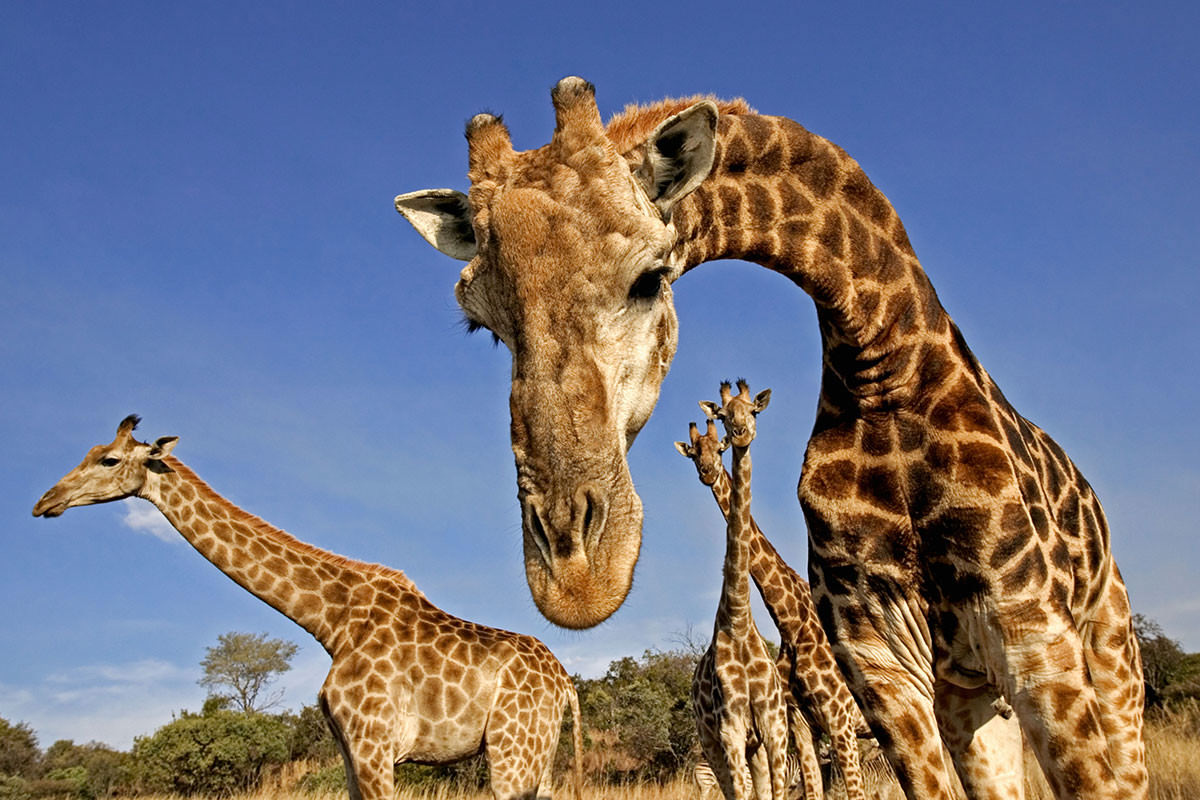
Giraffes
After a long hiatus, NAOTW is back and it couldn't be better timing because January is National-International Giraffe Cardiovascular Neatness Month.  How neat is that!  Giraffe's (pronounced "gi"-like gyroscope and "raffe" like Raffi of Baby Beluga fame) have one of the neatest cardiovascular systems in the animal kingdom!
Raffi
Let's start with the neck. It long, it's strong, and it's down to get it's friction on. Giraffes long necks, which have as many cervical vertebrae as humans and other mammals (7) but are just longer (10-11 inches), are useful for a butt-ton of things such as:

*reaching wicked high branches to feed on acacia leaves and seedpods (which are highly nutritious but also are toxic to other animals..yuckers)
*fighting with other giraffe's by using their head-neck combo as a medieval flail weapon (longer necks increase the torque they can exert on their "genemies"--Giraffe-enemies if you will.  VIDEO HERE
*AND long giraffe necks provide ample real estate for "gickies"---or giraffe hickies---and other related activities of ungulate foreplay. 
 

Because their necks are so g-darn long their hearts must generate enough arterial blood pressure, nearly 300mmhg, to overcome the gravitational and hydrostatic pressure exerted on the heart by the height of the column of blood in neck arteries. So you're probably thinking:

"The left ventricular and interventricular walls in the heart are probably really enlarged in order to produce such a systemic blood pressure." And you would be wrong. I mean right.  Very fucking right.  NERD ALERT

Giraffe heart - the left ventricle walls (above) are nearly 8cm thick 

You're probably also thinking, why don't giraffes get super duper dizzy when they bend their necks down to drink.  It's because that neck, underneath all those gickies, has a complex pressure regulation system called the rete mirabile that prevents excess blood flow to the brain when the giraffe drinks or dips it's head low to do lines of "gocaine" or giraffe cocaine. "Wait a minute, Max," a reasonably headed person might say, "giraffes? cocaine? gocaine? no way Gose." Well, giraffes have one of the shortest sleep requirements of any mammal, between 20 minutes and two hours in a 24 hour period.  Now I say, give me a more plausible explanation for their short sleep requirement other than excessive gocaine use.

Then, since giraffes have the blood pressure of an obese person from Kansas who does nothing but work hard on her foopa game, smoke 2 packs of heaters a day, gurgle ground beef, and hold Chipotle burritos as a security blankets, you'd expect them to stroke out and the pressure exerted on the lower vessels to push fluid though the capillary walls like this lady:

Visual representation of giraffe blood pressure in a human from Kansas
Giraffes, though, have a tight sheath of thick skin over their lower limbs which maintains high extravascular pressure just like a Iceman's G-suit in Top Gun.

Hope you learned a lot about giraffes!  How neat are they!

Sunday, August 14, 2016

The Frigatebird: The Klepto-Cloud Surfing Guido Seabird With a Big Sac


A male frigatebird in flight. Courtesy: Harvey Barrison/Flickr
It's unfortunate that there's so much neatness surrounding the frigatebird because in reality they're assholes; mostly the guido dudes. Let's dig deep into this asshole and discover what it's constructed with first, and then we'll overpower it with an enema of neatness.
 
Frigatebirds are the Jersey Shore douchebags of the tropical seabird family. In order to court a mate these GTL seabirds inflate their red gular throat pouches, vibrate their outstretched wings, produce a drumming sound by vibrating their bills together, and sometimes give a whistling call. They're literally bird guidos who show up to the club, bust their chests out, shimmy, and holla at ya girl. Then, after a female has chosen a mate and they copulate, Paulie D gathers some sticks for a nest and the female constructs it and it's cemented with guano. Both Paulie D and his lady take turns incubating the egg for 41-55 days and take turns feeding the chick for around 3 months. Then after about 3 months Paulie D gets fed up with the responsibilities of raising a kid and leaves his lady to find another birdie to shake his sac at without even paying child support.
A great frigatebird chick wearing a Gucci fur coat that was probably stolen.
Finally, not only does Paulie D frigatebird fly the coop when parenting starts getting real, he also gets his food from through theft (to be fair, the females also engage in larceny). Frigatebirds are known as pelagic kleptoparasites. Pelagic meaning they feed in the open ocean as opposed to around costal areas. And kleptoparsites since they gain a large portion of their diet by harassing other birds and steal their catches. Guess it shows that all frigatebirds are essentially products of broken homes and lack that stable parenting environment with both a mom and dad present.
A female great frigatebird

Now to the neatness. First, frigatebird feathers aren't waterproof so they can't land in the water...sooooo in order to stay aloft for an extended period of time, they intentionally fly into clouds. They hitch rides on the warm air updrafts from the sea surface to the top of a cloud. Recent research documented that some of the birds stayed aloft for nearly 2 months without landing. One bird flew nearly 40 miles without a wing flap. They also have been know to reach altitudes of over 12,000ft above the sea surface, nearly freezing conditions, and unheard of for a tropical bird and probably the highest relative to the surface of any bird. WHOA! Neatness overload. One thing that helps the birds achieve this is that their wingspan can reach up to 7.5ft and they have the largest wing area to body weight ratio of any bird. The size of one's ratio is important for anyone, but REALLY important for these peculating FUBU-wearing throat puffers.
 
Researchers also discovered that winds that form the updrafts in the atmosphere that the frigatebirds ride also disrupt waves at the sea surface. When the waves are disrupted, deeper water tends to rise carrying with it small microscopic plants like phytoplankton that attract small fish. Then bigger fish eat the smaller fish which creates a feeding frenzy that the frigate birds take advantage of to grub out. So not only is Paulie D a degenerate klepto dad, but he also catches free rides on the atmospheric rollercoaster of air currents, getting on and off when he needs a fish sandwich. Tubular! How neat is that?


Frigatebird Range

Sunday, April 17, 2016

Oh I come from a land from a far away place...

They have bushy untamed eyebrows, two rows of long eyelashes and long fit legs. They sport a fat backside and large, tough lips.  They have incredible control over their nostrils and fashion a huge moose knuckle. No folks, the neat animal of the week isn't a transvestite BJ hooker who's top half resembles a cocaine invaded Eugene Levy and bottoms like Kim Kardashian wearing nothing but spandex bike shorts exposing her giant smuggled yo-yo.  IT'S A CAMEL!!!

Courtesy wikipedia images
There are 2 kinds of camels in the mundo: Bactrian, or Central/East Asian camels which have 2 humps and dromedaries, which are Arabian camels with one hump which we will primarily focus on as the NAOTW. 

The Black Eyed Peas (a hiphop/pop group for those who lived under a pile of sand in the 2000s) provided a very profound question regarding camels in their smash hit "My Humps":

Whatcha gonna do with all that junk
All that junk inside your trunk
So what do camels DO with all that neat junk inside that trunk hump?  Well, it's actually not water in that hump but fat, sometimes more than 80lbs of it that they can metabolize into energy when they are in the middle of desert really far away from the nearest Arby's.  Since their insulation is concentrated in one location in their hump trunk and not distributed around their whole body they hardly sweat and can travel up to 100 miles in the desert. 
Courtesy Britannica
Camels could also be compared to ecstasy obsessed teenagers as they very efficient water drinkers. Yet, camels can drink 30 gallons of water in 13 minutes and they don't die of an electrolyte imbalance and brain swelling.  That's a lot of water, how neat is that!  
Courtesy Google Images
Arabian camels have adapted a number of characteristics that help them survive in the desert: they can close their nostrils so sand doesn't get in their business or they don't get high on cocaine when they hang out with Charlie Sheen. They have really bushy eyebrows, 2 rows of eyelashes and a 3rd clear eyelid all to shied them from the sun and sand.  
Finally, some words about the swollen hatchet wound, the vertical smile or the folded pancake better known as the camel toe. 
Courtesy Google Images
Camels walk on their toes much like a Caitlin Jenner in high heels but instead of a heel, Camels have a ball of fat that forms a soft pad on the bottom of its foot. The pad supports them much like a snowshoe and allows them to walk easily on the sand.  
Finally, some neatness that has recently been discovered about the camel is that camels actually originated in the high arctic forests of North America during the Eocene period around 45 million years ago and dispersed to Asia and west from there via the Bering Isthmus. Camels are AMERICAN!!!  Scientists believe their humps were adapted to get them through cold arctic winters and their broad feet to walk through the snow. Yet this camel was thought to be around 9 feet tall and weigh around a ton.  And instead of smoking 1 cigarette like Joe Camel they smoked at least a dozen at a time.  

Monday, March 28, 2016

Leatherback Turtle

Although the tubular turtles Crush and Squirt in the righteous film Finding Nemo were actually Pacific green turtles, this week's Neat Animal of the Week is in the same superfamily Chelonioidea and is equally as radical and arguably neater in neature.  The leatherback turtle is the "blue whale" of turtles; they are the largest turtle on earth AND one of the largest living reptiles. They'll grow up to 7 feet long and reach nearly 2000 pounds. But ask any man with small hands and they'll tell you: size isn't everything. Lady Leatherbacks will tell you differently. The leatherbacks are lucky that they not only have the size thing going for them, they also have a whole lot of neatness on their side. 

Image: National Oceanic and Atmospheric Administration Fisheries
Leatherbacks can dive to depths of 4,200 feet, which is deeper than any other turtle, AND they can stay down for up to 85 minutes. Who knew Franklin the turtle wasn't such a pussy after all.  (Disclaimer: Franklin wasn't actually a leatherback turtle, but more likely a box turtle, which are totally pansy turtles.  It just rolled off the tongue so well.)

Leatherbacks are pelagic, meaning they spend most of their lives in the open ocean. After mating at sea, females come ashore to nest. At night they dig a hole in the sand, lay down around 100 eggs and then leave a large ruffled area to make it difficult for babysnatching terrorist predators to find the nest. They do this several times during nesting season at around 8-12 day intervals. I know what you're saying, "Max, these turtles come ashore and basically download a brownload of eggs in a hole once a week, what's so neat about that?"
I was able to sponsor some baby leatherbacks and release them into the ocean in Guatemala in 2010. The day was filled with fruit, rum and many tears. 
Well you jabroni jerkass, these leatherback mamas travel on average 3,700 miles to the exact beach they were born to bury their offspring after not having been there since they were a wee hatching. Western Pacific leatherbacks engage in a brain melting migration, swimming from nesting beaches in the western Pacific (primarily Indonesia, Papua New Guinea, and the Solomon Islands area) to noshing grounds in the eastern North Pacific (almost 7,000 miles). Holy Jebidiah peach cobbler that is so gee dang neat. See map below. 
Image: National Oceanic and Atmospheric Administration Fisheries
Unfortunately because of factors such as eggs taken by humans and other predators, falling victim to fishing lines and nets, or ingesting plastic mistaken for jellyfish, only 1/1000 leatherback hatchlings reach adulthood.  Very not-neat. 

Finally, as to the name. They are called leatherbacks not only because they were super into the show Sons of Anarchy and are honorary members of some West Coast biker gangs but also because they are the only sea turtle that doesn't have a bony shell.  Their top layer is actually 1.5 inch thick leathery, oil-saturated connective tissue overlaying loosely interlocking dermal bones.  

Keep on preserving the neatness in the universe and have a great week. 

Thursday, February 25, 2016

The Spirit Bear

There is so much freakin' neatness in the NAOTW this week!  The Spirit Bear or the Kermode Bear is literally an inside-out Oreo: black on the inside, white on the outside. The Spirit Bear is like "Free Willy" Michael Jackson not "ABC" Michael Jackson, and minus the creepy kid touching and propofol stuff which is super not neat. By that I mean the Spirit Bear is actually a black bear but presents with white fur. (For the record Michael Jackson is generally not neat.) Kermode bears are NOT albino, their nose, eyes, lips, and paws are dark colored. 

Spirit bears carry a double recessive mutation at the melanocortin gene, the same gene associated with ginger-ism (yes it's a disorder) in humans. To be born white, a bear needs to inherit the mutation from both parents. Both parents can be black but each carry one copy of the recessive gene to create a white baby. In the rainforests of coastal British Columbia spirit bears and regular black bears live in harmony and spirit bears are a great mixture of both white and black bear cultures. That's pretty neat. I bet if a brown bear came to hang out and in coastal BC they'd be like, "Hey you brown bear, you're different from us and you look weird but that's cool, let's go get some smoothies." Someone should inform the Donald of the spirit bear. 


Scientists believe the gene mutation was a result of the last ice age and bears adapting to better camouflage. But why hasn't the trait disappeared in the last 11,000 years? Researchers have recently found that the spirit bear's white fur gives them an advantage when fishing. Although white and black bears tend to have the same success rate after dark during the day spirit bears catch salmon in 1 out of 3 attempts while their black counterparts catch them in 1 out of 4 attempts. 

The spirit bear's ability to catch more salmon, their primary fat and protein source, may account for one reason the recessive gene has prevailed since their able to raise more healthy offspring is increased. In addition, local tribes have also resisted hunting the spirit bear throughout the millennia due to their sacred nature and availability of other sources of fur and meat.  

Geedanggit I want to see a spirit bear! According to Native American folklore, the spirit bear is a reminder of times past and the hardships during the ice age and is a symbol of peace and harmony.  Have a neat week and please channel the neatness of the holy spirit bear.  

Friday, January 22, 2016

The Bearded Vulture

This weeks Neat Animal of the Week is the bearded vulture. Bearded vultures take many forms for example as the dirty hippy woman from Bend, OR that scavenges through the trash and refuses to shave any body hair in protest of Nair's testing on baby endangered black rhinoceros fetuses.  Or in the form of a very clever yet disgusting name a man gives to his au naturel meat popsicle. Regardless of those other manifestations of the bearded vulture, this week we're talking about the bird of prey, the Lammergeier, the neat bearded vulture.  The BV's diet is nearly 90% bone.  They are one of the only animals that will even eat bone, let alone survive on a strictly boner diet. They can digest the bone by having an incredibly caustic gastric acid in their stomach.  Human gastric acid is between 1 and 1.5 on the pH scale. Bearded vultures maintain a gastric acid pH of nearly 0.7, about 6 times as strong as human acid (pH scale is log based). How neat is that super strong stomach acid? 
 
 
When possible the bearded vulture will try and deep-throat the whole bone, and when it can't it usually calls their friend Candice who had a lot of experience with this type of thing in college at ASU for advice.  But seriously the pieces it can't swallow it takes into the air propelled by thermal updrafts and drops onto rocks, shattering them into pieces it can manage to swallow.  Though only between 15-20lbs maximum, these neat animals can pick up an 8lb water buffalo femur and carry it into the air.
Their interesting feather colors are actually manicured. They apply it by rubbing themselves against cliffs and rolling in the mud with high iron oxide content in the soil that stains the feathers. The coloring is a status symbol.  Birds with the most intense and deeply stained feathers demonstrate to mates and competition that they are fit and fed enough to get their hair did all the time (see: Salt N Pepa song "Boom I Got Your Boyfriend") 
These beasts of the bone live in the mountainous regions spanning Europe, Asia and Africa. God and neatness willing, they will make like Prince Akeem of Zamunda and come to America! 

Friday, December 25, 2015

The Christmas Ass

Neatness is Christmas themed this week as we visit inside the ass. And after your journey deep into the ass you'll be forever changed, question why you never did it before, and you might even consider drinking ass milk straight from the source.  How neat is that! 

As I alluded to previously the NAOTW this week is the original beast of burden, also known as the burro, jackstock, donkey and fittingly the animal that carried Mary and Joseph into Bethlehem on December 25th before the birth of the second most famous Jew behind Barbara Streisand, Jesus.  Merry Christmas!  

The donkey is a super neat creature that doesn't get much credit.  But let me tell you, I am definitely an ass man.  Asses have an incredibly good memory - they can recognize areas they were at, other asses they were with and a bad batch of Indian curry up to 25 years before.  That's a smart ass!  

All asses originate from the desert and are all descendants of the African Wild Ass, which is critically endangered.  It is our duty as preservers of the neatness to protect, covet and cherish the Wild Asses that we still have left on this planet.  Because food is scarce in the desert, donkeys utilize 95% of what they eat on account of their tough digestive system that can break down inedible vegetation and extract moisture from food more efficiently than other mammals.  They do this primarily through hind gut fermentation, microbial action in the cecum and large intestine, a decrease in the rate of renal urea filtration combined with an increase in the fraction reabsorbed and the ability to recycle nitrogen in the gut. Thus ass manure is not a very good fertilizer with little nitrogenous contents.  

Donkey's ears are neat because they allow them to hear the call of another donkey nearly 60 miles away.  Their large ears also prevent asses from getting too sweaty and act as a vent for ass heat to release.

Finally, we get to the main event: ass milk.  You might be thinking at this moment, "Max, I've never thought about drinking ass milk and as far as I know none of my friends drink ass milk.  It seems foreign and backwards and what would my parents or coworkers say if they found out."  That's a natural reaction to the prospect of chugging down on some ass milk but let me tell you ass milk is the best substitute for human milk for its context in lactose (sugar), proteins, minerals, and omega-3 fatty acids.  If that wasn't enough to convince you to try ass milk research has also shown that ass milk my be useful in the prevention of atherosclerosis, treatment of immune related diseases, act as an effective antimicrobial agent, AND Cleopatra bathed in ass milk every damn day.  

Merry Christmas everyone and I hope you preserve and spread the neatness this holiday season

Tuesday, December 8, 2015

NAOTW Hanukkah edition: The Jewfish

Photo credit: ABC news
In honor of 2175 years since the rededication of the 2nd Temple of Israel by the Maccabees following their neat victory over their non-neat Greek-Syrian oppressors we visit an animal whose common name is most likely a result of centuries of anti-Semitism and jabronis not knowing shit about fish: the Jewfish. 
 
The Epinephelus itajara, or the Atlantic goliath grouper or the Jewfish which it was commonly known as for centuries is a large saltwater fish found primarily in shallow tropical waters in the Caribbean.  Although they fit into the caricature of an Ashkenazi Jew, these neat groupers feed largely on crustaceans (in particular spiny lobsters, shrimps and crabs), fishes (including stingrays and parrotfishes), octopus, and young sea turtles, which is far from the typical Hebrew diet of bagels, brisket, and matzo ball soup. Their prey is ambushed with a quick snap of their jaw and they have sharp-ass teeth to capture them eternally although they usually just swallow and engulf them whole. I assume many of them also begin their day reading the New York Times in between bouts of Teffilin.
Photo credit: National Geographic
The Jewfish has the unique ability to produce a distinctly audible rumbling sound by the contraction of their swim bladder. This sound travels great distances underwater and is also used to locate other Jewfish.  Yet when Jewfish get older and they have an enlarged prostates they resort to a higher pitch nagging sound until they get what they want. 
 
Jewfish's widest point is more than half its total length, they can grow to lengths of over 8 feet and can weigh as much as 800 pounds.  That's a lot of Jewfish!!!

Finally, the Jewfish is listed as a critically endangered species because of overfishing and much like the Jewish people has been a protected species in the U.S. and Caribbean waters since the early 1990s.
 
Happy Hanukkah!!!  Have a neat 8 crazy nights. 
 
Here's a neat video of Jewfish eating a Nazi shark:   https://www.youtube.com/watch?v=O37HI_AX9nY
 
And here's a 450lbs Jewfish in 1976 caught by fisherman Buddy Jenks in Florida. 
Photo credit: Florida Museum of Natural History


Thursday, November 26, 2015

Wild Turkey


Neatness this week is Pilgrim-ish, Native American-ish, Mexican-ish as we visit with the wild turkey (Meleagris gallopavo) on this DĂ­a de AcciĂłn de Gracias.  It is fitting to use the Spanish name for Thanksgiving since the story of the wild turkey begins in Mexico much like tacos, mariachi and bacterial bouts of explosive diarrhea.  In the early 1500s, Spanish explorers (non-preservers of the neatness in the universe) brought back wild turkeys from the new world and by 1530 Spanish farms were gut deep turkey with cocks.  By the time the 1620 gang set sail they carried domesticated turkeys on the Mayflower. And in 1621 when the governor sent out 4 men to hunt for fowl for the meal with the Wampanoag Indians they returned with presumably wild turkeys which were the distant cousins of the ones they brought over from Europe. 

Now to the neatness:  It makes sense Benny Franklin wanted the turkey to be the national symbol because a wild turkey's bald head can change color in seconds due to changes in emotion. The birds’ heads can be red (fight), white/pink (normal) or blue (excited). 'Merica!!!  Adult male turkeys are called toms and females are called hens. Very young birds are poults and adolescents are called jakes.  And the one in my oven right now is called Sweet Caroline.
 
Wild turkeys sleep in trees. That's pretty NEAT! And are able to fly short distances at up to 55 mph. Most domestic turkeys however are unable to fly due to living in America and drinking copious amounts of Bud Light Lime for centuries. And the selective breeding thing has something to do with it as well...i think.  

Finally we return to Mexico where the turkey is believed to have been sacred in ancient cultures. The Mayans, Aztecs and Toltecs referred to the turkey as the ‘Great Xolotl’, viewing them as ‘jeweled birds.'  So on this Thanksgiving when you are doing neat things with your family, suck down a Bud Light Lime and reminisce of a time when us Americans were refugees in a strange land and sacred jeweled birds flew free and wide in the eastern skies like the bald eagle of yore. 

Saturday, October 31, 2015

Jewel Wasp


Hide your kids, hide your wife!  Zombies are real and this mommy is a cold blooded zombifier!  Neatness is spooky this week with the parasitic emerald cockroach wasp (jewel wasp). The preggers she-wasp first injects venom between the front 2 legs of a regular non-zombie cockroach and paralyzes it. Then it switches positions and stings in the back of its neck. Basically this is zombification wasp foreplay and things are just getting caliente. Then the wasp employs the 3-strikes your out policy and uses specialized sensory organs on the tip of its stinger and injects a big load of venom into 2 precise locations in the roach's brain (the supra and sub-esophageal ganglion). The venom blocks a chemical substance called octopamine in the cock-a-roach's brain that controls its ability to walk, fight and talk (assuming cockroaches can talk). 

The primagravida wasp amputates the cockroach's antennae and drinks the roach's blood rich in sugar and protein.  She then bites down on the remaining stub of the antennae and leads the now zombie cockroach into a super secret death chamber where the wasp lays an egg on the zombie's abdomen and then covers the chamber and all the evidence with dirt.  Finally, the wasp larva hatches and eats the still alive zombie roach from the inside out.  The process takes around 7-8 days and it's important that the roach stays alive or else it would rot.  Best sexcapade ever! 

And to top it all off, there's a super neat video narrated by the sultan of neat, David Attenborough:  https://www.youtube.com/watch?v=vl_9kghmChw 

Wednesday, October 14, 2015

Cymothoa Exigua - the sex-changing parasitic tongue-eating louse

The neatness of this creature is kaleidoscopic: It seemingly goes on forever and if you look and think about it too much you'll get sick and confused. This neat creature is a sex-changing parasitic tongue-eating louse of the crustacean phylum (shrimp, lobster, crab).  An infant C. exigua lands in a fish's gills, infiltrates it and begins to develop into a male. Then when a second one appears in the gills it stimulates the first one to go all "lady boy" and turn from male into female (scientific term for Protandrous hermaphrodites I am pretty sure) and crawl up from the gills, through the throat and anchors herself to the tongue with her 7 pairs of legs. 

Then the 2nd creature is the male that impregnates the newly turned Betty. The neatness continues and the C. exigua that attached onto the tongue will not only suck blood and devour the tongue until it's a muscular stub, atrophies and falls off AND with the rose snapper fish it will replace the tongue with its body and provide the fish with a newly functional tongue. This is the only known instance in the animal kingdom of a parasite functionally replacing an organ of its host. How neat is that! 

Then after procreation is complete and it has released its freaky offspring and drained all the blood supply from the tongue, it is believed that the C. exigua does like Elsa and "let it go" from the stub that was once a tongue and gets swallowed by the fish.  Then the fish, with no tongue, eventually dies too.  

So let's sum up: a 14-legged hermaphroditic parasite get's all vampire-like and sucks the blood out the tongue of a fish, uses it for a bang pad, get's knocked up, kicks the kids out of the basement and forces them to find their own bang pad, then this things goes all Moby Dick gets swallowed when the well dries up.  NEAT!  

Tuesday, October 6, 2015

The Torquigener albomaculosus pufferfish - The Psychedelic Mushroom Taking Euclidian Scholar Pufferfish


Scientists were dumbfounded by intricate circles with geometric designs about six feet in diameter found on the seafloor off the coast of Amami-Ìshima Island in Japan. This is in itself super neat because that meant people would have to go on neat adventures to discover the culprits.  

In the last few years scientists discovered a new species of pufferfish, Torquigener albomaculosus, was responsible for these mystical underwater hippy designs.  It turns out males search far and wide for psychedelic sea mushrooms, talk about concepts such as time, space and the best way to eat Oreo cookies with there hommies and then construct the circles as spawning nests by swimming and wiggling in the seafloor sand. The nests, used only once, are made to attract females. The nests have double edges and radiating troughs in a spoke-like geometry. The designed ridges and grooves of the circle serve to minimize ocean current at the center of the nest which protects the eggs from the turbulent waters and possibly predators too.  Wow, this newly discovered species of pufferfish are clearly Euclidian scholars and super neat!   If only psychedelic sea mushrooms existed.  


Here's a video showing them creating some of their underwater designs:  https://www.youtube.com/watch?v=YOGvVn7IWVY

Thursday, September 24, 2015

Geographic Cone Snail the Cannoli Eating Don Gastropod Mollusk

Set scene: Imagine you're a stereotypical Italian mobster cone snail sitting at a stereotypical Italian market eating some cannolis with some other stereotypical mobster cone snails.  Don Gastropod Mollusk tells you to whack a baby grouper fish that's been trimming off the top.  One of the other cone snails at the table, Fat Conoidea, says he'll do it the old fashioned way.  Then you, a geographic cone snail say, "Fo-get-about-it.  I'm going to make that fish sleep with the fishes.  

There are more than 100 species of venomous cone snails that are highly effective predators of fish. Most of them kill via a neurotoxin venom injection that targets the nervous system of prey, predators, or competitors. Two of those species, the Geographic Cone Snail and the Conus Tulipa are WAY neater than the others. In contrast to their brethren, these snail cobras target their prey's energy metabolism, which is radical and super neat. 

They've evolved specialized insulins that are more similar to fish insulin than mollusk insulin which they either release as a toxic gas cloud in the vicinity of a school of fish or as a direct injection. The insulin venom causes the fish to go into hypoglycemic shock, wherein the fish's low blood glucose causes it into a "sugar coma" where the cone snail can attack and eat the fish whole while the fish is in an almost drunken stupor.  Whoa!  That's insanely neat! 

Here's a video of the conus tulipa getting its prey:  https://www.youtube.com/watch?v=UHiGuquJmpE

Here's a video of a cone snail baiting, stunning and eating it's prey: https://youtu.be/JjHMGSI_h0Q

They're the most poisonous cone snail of all cone snails and have even killed a few Curious George human scuba divers that have tried to pick up the shell.  Not so neat! 

Wednesday, September 9, 2015

Chameleon

Picture of a chameleon
Get ready to learn about a super neat animal mostly found in Madagascar and the rest of Africa. Many people think the chameleon takes on the color of the surface it touches which is mostly true. But most of their skin's hue changes are a result of physiological reaction that is for communication. The chameleon express itself via it's skin tone reflecting courtship, stress, and competition among others. Holy Spicoli neatness galore! 

Chameleons tongues are also super neat!  "Stored in the lizard’s throat pouch is a tongue bone surrounded by sheaths of elastic, collagenous tissue inside a tubular accelerator muscle. When the chameleon spies an insect, it protrudes its tongue from its mouth, and the muscle contracts, squeezing the sheaths, which shoot out as if spring-loaded." Here it is in slow-mo  https://www.youtube.com/watch?v=z3oh73amxQo

And finally recent neat research has discovered clues to how chameleons actually change color.  Underneath a layer of pigmentary skin cells, the researchers found another layer of skin cells with nanoscale crystals arranged in a triangular lattice. They found that the chameleons can adjust the space between the crystals which affects the color of light that the lattice of crystals reflects. As the distance between the crystals increases, the reflected colors shift from blue to green to yellow to orange to red. How neat is that!